
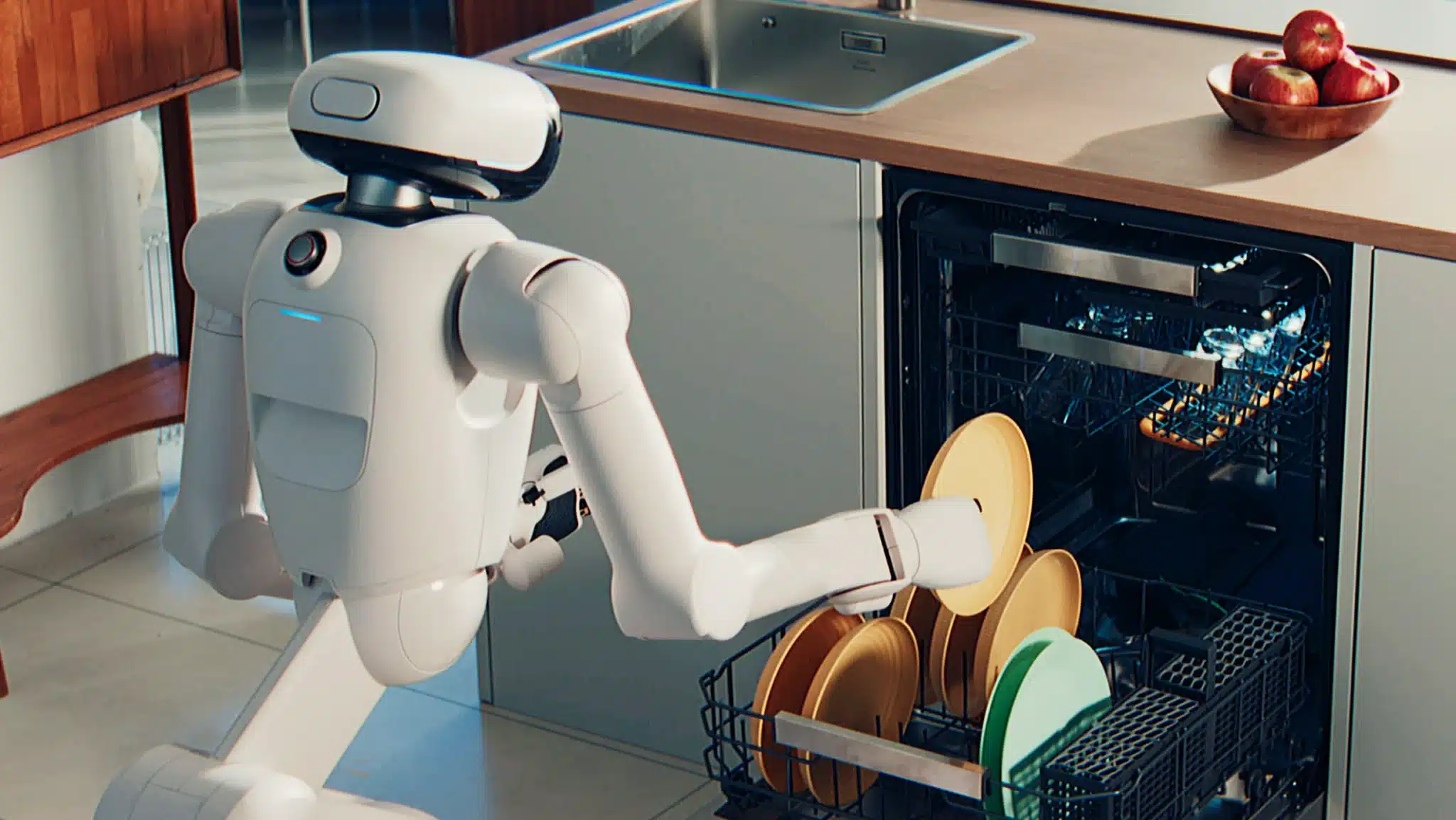
For decades, the promise of a robot butler has been a staple of science fiction, from the Jetsons’ Rosie to the sleek androids of futuristic cinema. However, walking through the halls of the Las Vegas Convention Center during CES 2026, it is clear that the “future” has finally arrived in a very tangible, physical form. This year’s show has moved beyond the experimental prototypes of the past, unveiling a new generation of AI-powered humanoid robots and specialized helpers that are ready to move into our living rooms. These aren’t just smart gadgets; they are sophisticated AI helpers capable of performing complex household chores like cooking, folding laundry, and even navigating the once-insurmountable obstacle of a staircase.
The theme of CES 2026 is undoubtedly “Physical AI.” While previous years focused on the digital brains of artificial intelligence, this year is about giving those brains a body. Companies like LG, Roborock, and Dreame have stolen the spotlight with machines that demonstrate a level of dexterity and autonomy previously thought impossible for consumer-grade electronics. As these robot butlers transition from trade show demos to practical home appliances, they are poised to fundamentally change the way we live, work, and manage our domestic lives.
LG CLOiD: the humanoid heart of the smart home
The undisputed star of the robotics pavilion this year is LG’s CLOiD, a humanoid robot that represents the culmination of years of research into home automation. Unlike the specialized vacuum robots of the past, CLOiD is designed as a general-purpose assistant. During a live demonstration that left the audience in awe, the robot was seen ponderously but precisely loading a towel into a washing machine and later folding a stack of laundry with surprising delicacy [1].
CLOiD features a humanoid form factor with a head, a torso, and two highly articulated arms, though it moves on a wheeled base for maximum stability and efficiency within a home environment [2]. What sets it apart is its integration with LG’s latest AI ecosystem, allowing it to understand natural language commands and recognize hundreds of household objects. It doesn’t just “clean”; it understands the context of a messy room, knowing which items belong in the dishwasher and which should be placed in the hamper. This level of contextual AI is what finally bridges the gap between a machine that follows a path and a true robot butler.
Conquering the stairs: the roborock saros rover
One of the most persistent complaints about robot vacuums has been their inability to handle multi-story homes. For years, owners had to manually carry their devices up and down stairs. Roborock has finally solved this “stair problem” with the introduction of the Saros Rover. This revolutionary device features a unique wheel-leg architecture that allows it to lift itself over obstacles and, most impressively, climb and clean individual steps of a staircase [3].
The Saros Rover doesn’t just climb; it cleans as it goes. Its legs allow it to adjust its height and angle, ensuring that the brushes reach into the corners of every step as it moves between floors [4]. This innovation effectively doubles the utility of a single robotic vacuum, allowing it to maintain an entire house without human intervention. In demonstrations at CES 2026, the Saros Rover was seen dodging complex obstacles and even performing a “dance” to show off its balance and agility, signaling a new era for autonomous floor care.
Dreame’s vision: from robotic arms to stair-climbing vacuums
Not to be outdone, Dreame has arrived at CES 2026 with a diverse lineup that pushes the boundaries of what a home robot can be. Their flagship announcement, the Cyber X, is another entry into the stair-climbing category, utilizing a different mechanical approach to navigate vertical changes in the home [5]. This competition in the “stair-climbing” space is a clear indicator that the industry has identified and is now aggressively solving the final hurdles to total home autonomy.
Beyond floor care, Dreame also showcased the Cyber10, a sophisticated robotic arm concept designed for kitchen and countertop tasks. While still in the early stages of consumer deployment, the Cyber10 demonstrates the ability to pour coffee, handle delicate glassware, and assist in basic meal preparation. When paired with the company’s AI software, these arms can learn new tasks through observation, a process known as imitation learning. This means that in the near future, your robot butler might learn your specific way of making a sandwich just by watching you do it once.
The AI brain: making physical robots smarter
The hardware at CES 2026 is impressive, but the real magic lies in the AI that powers these machines. We are seeing a shift from “scripted” robots to those powered by Generative AI and Large Language Models (LLMs). This allows robot butlers to process complex, multi-step instructions like “clean up the mess in the kitchen and then bring me a glass of water.” The robot must break this down into sub-tasks: identifying the mess, choosing the right cleaning tool, navigating to the kitchen, and then interacting with the refrigerator or faucet.
This Physical AI also benefits from computer vision advancements that allow robots to see the world in 3D with incredible accuracy. They can now distinguish between a pet, a child’s toy, and a piece of trash, adjusting their behavior accordingly. This is achieved through a combination of LiDAR, depth cameras, and neural networks that have been trained on millions of household images. The result is a robot that doesn’t just see pixels, but understands the geometry and semantics of its environment.
Furthermore, the use of edge computing means that much of this processing happens locally on the robot, ensuring faster response times and better privacy for the user. By processing data on-device rather than in the cloud, these robots can react to sudden changes—like a toddler running into their path—in milliseconds. As these brains become more capable, the physical bodies of the robots are becoming more useful, creating a virtuous cycle of innovation that is bringing the AI helper into the mainstream. We are also seeing the rise of federated learning, where robots can share “knowledge” about how to handle new objects without ever sharing private images or videos of their owners’ homes.
The humanoid arms race: figure, tesla, and beyond
While LG and Dreame are making waves with consumer-ready products, the broader “humanoid arms race” is heating up behind the scenes at CES 2026. Companies like Figure AI and Tesla (with its Optimus program) have set the bar high for what a general-purpose humanoid can achieve. At this year’s show, several startups have emerged with specialized humanoids designed for the “silver economy”—the growing market of elderly individuals who wish to age in place. These robots are equipped with soft-touch sensors and “empathy engines” designed to provide not just physical help, but social interaction.
The competition is driving down costs and accelerating the development of actuators and battery technology. In 2024, a humanoid robot was a multi-million dollar research project; by 2026, we are seeing the first models priced similarly to a high-end used car. This price compression is essential for mass adoption. Moreover, the standardization of robot operating systems is allowing developers to create “apps” for these machines, much like we do for smartphones. You might soon download a “Chef App” that gives your robot the specific skills needed to master Italian cuisine, or a “Gardening App” for outdoor maintenance. This modularity is a key reason why the robot butler is finally becoming a reality.
The impact on the modern household
As these robot butlers move from the convention floor to the retail shelf, they raise important questions about the future of the home. The potential for increased accessibility is enormous; for the elderly or those with mobility issues, a robot that can climb stairs and handle laundry is a life-changing tool for independence. For the average busy family, these AI helpers promise to reclaim hours of time previously spent on mundane chores, allowing for more quality time and less domestic stress.
However, the rise of the home robot also brings challenges that society is only beginning to grapple with. Privacy remains a top concern, as these machines are equipped with high-resolution cameras and microphones that map the most intimate spaces of our lives. While companies at CES 2026 are touting “on-device processing” and physical privacy shutters, the potential for data breaches or unauthorized access to a mobile, camera-equipped device in the home is a significant hurdle for many consumers. There is also the risk of “function creep,” where a robot designed for cleaning might eventually be used for surveillance or data harvesting by third parties.
Additionally, there is the profound question of human-robot interaction and its psychological impact. How will our relationships with our homes and each other change when a machine is responsible for the “care” of the household? For children growing up in the 2026 era, a robot butler might be as normal as a microwave, potentially altering their understanding of labor and responsibility. There is also the risk of social isolation if people begin to rely on robots for companionship rather than seeking out human connection. CES 2026 has shown us that the technology is ready and the engineering hurdles are being cleared; now, it is up to ethicists, policymakers, and society at large to decide how to integrate these new autonomous members into our families and daily lives.
The dawn of the domestic robot era
The innovations seen at CES 2026 mark a definitive turning point in the history of technology. We are no longer talking about “if” we will have robot butlers, but “which one” we will choose. The combination of humanoid forms, stair-climbing mechanics, and advanced AI has created a perfect storm that is finally delivering on the promises made by science fiction decades ago. Whether it’s LG’s CLOiD folding your shirts or Roborock’s Saros Rover cleaning your stairs, the AI helper is no longer a dream—it’s a household appliance.
As we look toward the rest of 2026, the focus will shift from the “wow factor” of these demos to the reality of their performance in real-world homes. The “Physical AI” revolution is just beginning, and the robot butlers of CES 2026 are the pioneers of a new way of living. The home of the future isn’t just smart; it’s helpful, autonomous, and increasingly, it has a pair of arms and legs to get the job done.
References
- The Verge. (2026, January 6). CES promises the robot butler, but delivers better. https://www.theverge.com/tech/855329/rosey-robot-roomba-ces-2026
- CNET. (2026, January 7). CES 2026: Here Are the Best Robots So Far for Housework. https://www.cnet.com/tech/ces-2026-here-are-the-best-robots-so-far-for-housework-fun-and-more/
- Roborock Newsroom. (2026, January 6). CES 2026: Roborock releases the world’s first robotic vacuum with wheel-leg architecture. https://newsroom.roborock.com/gl/news/ces-2026-roborock-releases-the-world-s-first-robotic-vacuum-with-wheel-leg-architecture-as-it-joins-hands-with-real-madrid-football-club-
