
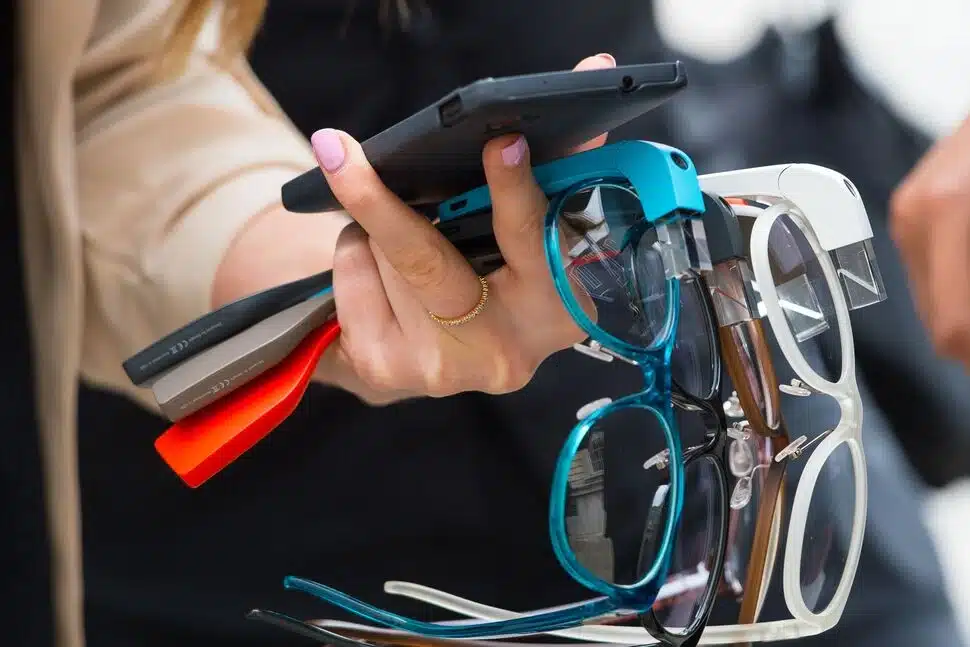
For two decades, the smartphone has reigned supreme as the undisputed king of personal technology, a ubiquitous extension of our lives. Yet, as we approach 2026, a seismic shift is underway, spearheaded by Google’s audacious re-entry into the smart glasses arena. This isn’t merely an incremental upgrade; it’s a strategic gambit to fundamentally alter how we interact with the digital world, moving from the “heads-down” posture dictated by our phones to a more intuitive, “heads-up” experience. With AI-powered smart glasses poised to become the next frontier, Google is not just launching a new product; it’s embarking on a quest to redefine personal computing and, perhaps, to finally “kill” the smartphone as we know it.
This article delves into Google’s ambitious vision for 2026, exploring the technological advancements, strategic partnerships, and philosophical underpinnings driving its smart glasses initiative. We will examine the pivotal role of Project Astra, Google’s multimodal AI agent, and the burgeoning Android XR ecosystem. Furthermore, we will analyze the challenges of privacy and adoption, the fierce competition from tech giants like Apple and Meta, and the profound implications for our daily lives as we transition towards an era where our digital interfaces are seamlessly integrated into our perception of reality. Is 2026 truly the year the smartphone begins its long, slow fade, replaced by a more intelligent, less intrusive form of technology?
The brain behind the lens: project astra and gemini
At the core of Google’s 2026 smart glasses strategy lies Project Astra, its groundbreaking multimodal AI agent. Unveiled at Google I/O 2024, Astra is designed to be a universal AI assistant that can “see” and “hear” the world in real-time, processing complex visual and auditory information to provide instant, contextually relevant assistance. Imagine walking down a street and your glasses, powered by Astra, can identify a rare plant, translate a foreign sign, or guide you to the nearest coffee shop, all without you ever needing to pull out a phone [1]. This is the promise of Astra – an AI that truly understands and interacts with your environment.
Integrated seamlessly with Google’s Gemini assistant, these smart glasses aim to offer an unparalleled level of contextual computing. Unlike current voice assistants that primarily respond to verbal commands, Gemini on smart glasses will leverage Astra’s visual input to offer proactive and intuitive support. This means your glasses could discreetly offer information about a landmark you’re looking at, provide real-time navigation overlays, or even help you find your keys by remembering where you last saw them. This deep integration of AI is designed to make the smart glasses not just a display device, but an intelligent companion that enhances your perception and interaction with the world, making the smartphone’s screen-based interaction feel clunky and outdated.
Beyond the screen: how glasses replace phone functions
The fundamental shift Google envisions with its smart glasses is a move away from the smartphone’s screen-centric paradigm. Instead of constantly looking down at a device, users will experience a “heads-up” computing environment where information is presented directly in their field of vision, or audibly, without obstructing their view of the real world. This has profound implications for how we perform everyday tasks that currently rely heavily on our phones.
Consider navigation: instead of following a map on a screen, smart glasses could project turn-by-turn directions directly onto the street ahead, or highlight points of interest as you pass them. For communication, discreet notifications could appear, and voice commands could allow for hands-free messaging and calls. Real-time translation of foreign languages, identification of objects or people, and even subtle health monitoring could all be handled by these wearable devices, making the smartphone’s functions redundant for many scenarios. The goal is to make technology disappear into the background, becoming an invisible layer that augments reality rather than distracting from it. This ubiquitous computing model is central to Google’s strategy to position smart glasses as the ultimate phone killer.
The three-tier strategy: from audio to full ar
Google’s approach to re-entering the smart glasses market in 2026 is a carefully calibrated three-tier strategy, designed to ease consumers into the new paradigm and avoid the pitfalls of its past attempts (like the original Google Glass). The initial phase, slated for 2026, will focus on audio-only smart glasses. These devices, designed to look like regular eyewear, will prioritize simplicity and discreet functionality, offering features like enhanced audio, voice commands, and seamless integration with Gemini for contextual information without a visual display [2]. This cautious re-introduction aims to build trust and familiarity with the concept of AI-powered wearables.
The subsequent tiers, expected in 2027 and beyond, will introduce more advanced augmented reality (AR) capabilities. These will gradually layer digital information onto the real world, starting with subtle overlays and eventually moving towards full AR experiences. This phased approach allows Google to refine the technology, address user feedback, and manage expectations, learning from the market as it evolves. By partnering with manufacturers like Foxconn for production and Samsung for design, Google is leveraging established expertise to ensure a more polished and consumer-friendly product. This methodical rollout is crucial for Google’s long-term ambition to establish smart glasses as a mainstream device, laying the groundwork for a future where AR is as common as the smartphone.
The privacy hurdle: learning from the past
One of the most significant challenges facing Google’s smart glasses is the lingering specter of privacy concerns, a lesson harshly learned from the original Google Glass debacle. The term “Glasshole” became synonymous with the perceived invasiveness of a device that could secretly record video and capture images, leading to widespread public backlash and social ostracization. For Google’s 2026 re-entry, addressing these privacy concerns is paramount.
The initial focus on audio-only smart glasses is a direct response to this. By removing the camera from the first iteration, Google aims to mitigate fears of constant surveillance and build a foundation of trust. Future AR models with cameras will likely incorporate clear visual indicators when recording, stricter privacy controls, and robust ethical guidelines to ensure user consent and public acceptance. The success of Meta’s Ray-Ban Stories, which feature a visible recording light, demonstrates that with careful design and transparent communication, smart glasses can overcome some of these hurdles. Google’s ability to navigate this delicate balance between innovation and privacy will be critical to the widespread adoption of its wearable technology and its quest to dethrone the smartphone.
The 2026 tech war: google, apple, and meta
The 2026 tech landscape is shaping up to be a battleground for the future of personal computing, with Google’s smart glasses entering a highly competitive arena. Meta, with its Ray-Ban Meta smart glasses, has already established a foothold in the market, offering a more fashion-forward and socially integrated experience. Their ongoing development of more advanced AR glasses, codenamed Orion, signals their long-term commitment to the space. However, the most formidable competitor is undoubtedly Apple, rumored to be launching its own AI-powered smart glasses in 2026 [3].
Apple’s entry could be a game-changer, leveraging its immense brand power, seamless ecosystem integration, and marketing prowess to mainstream smart glasses in a way no other company has. The competition between Google, Apple, and Meta will drive rapid innovation, pushing the boundaries of AI, AR, and wearable technology. This tech war will not just be about hardware specifications; it will be about ecosystem dominance, user experience, and who can most effectively convince consumers to abandon their smartphones for a new generation of intelligent wearables. The stakes are incredibly high, and 2026 promises to be a pivotal year in this technological showdown.
The future of mobile: will we still carry phones in 2030?
As Google aggressively pushes its smart glasses vision for 2026, the question naturally arises: what does this mean for the smartphone? While a complete disappearance by 2030 is unlikely, the role of the smartphone is almost certainly set to evolve dramatically. Smart glasses could absorb many of the functions we currently rely on our phones for, particularly those related to information access, communication, and navigation. The smartphone might transition into a more specialized device, perhaps serving as a powerful processing hub for the glasses, or a secondary screen for complex tasks.
This shift towards “ambient computing,” where technology is seamlessly integrated into our environment, suggests a future where our primary digital interface is no longer a handheld screen. Instead, it could be a pair of smart glasses that provide information and interaction in a more natural, less intrusive way. The convenience of hands-free operation, contextual awareness, and augmented reality could make the smartphone feel increasingly cumbersome. While the smartphone may not be entirely “killed,” its dominance as the central personal computing device could certainly be challenged, ushering in a new era where smart glasses become the primary gateway to our digital lives.
References
- NextPit. (2026, January 1). Google Has Big Plans: Can Smartglasses Finally Replace Smartphones?. https://www.nextpit.com/news/google-smartglasses-2026
- DIGITIMES. (2025, December 9). Google to launch AI-powered smart glasses in 2026 as competition heats up. https://www.digitimes.com/news/a20251209VL203/wearable-google-meta-ai-smart-glasses-2026.html
- Ainvest. (2025, December 21). Apple’s 2026 AI Glasses and the Emerging Smart Wearables Market: Strategic Positioning and Supply Chain Implications. https://www.ainvest.com/news/apple-2026-ai-glasses-emerging-smart-wearables-market-strategic-positioning-supply-chain-implications-2512/
