
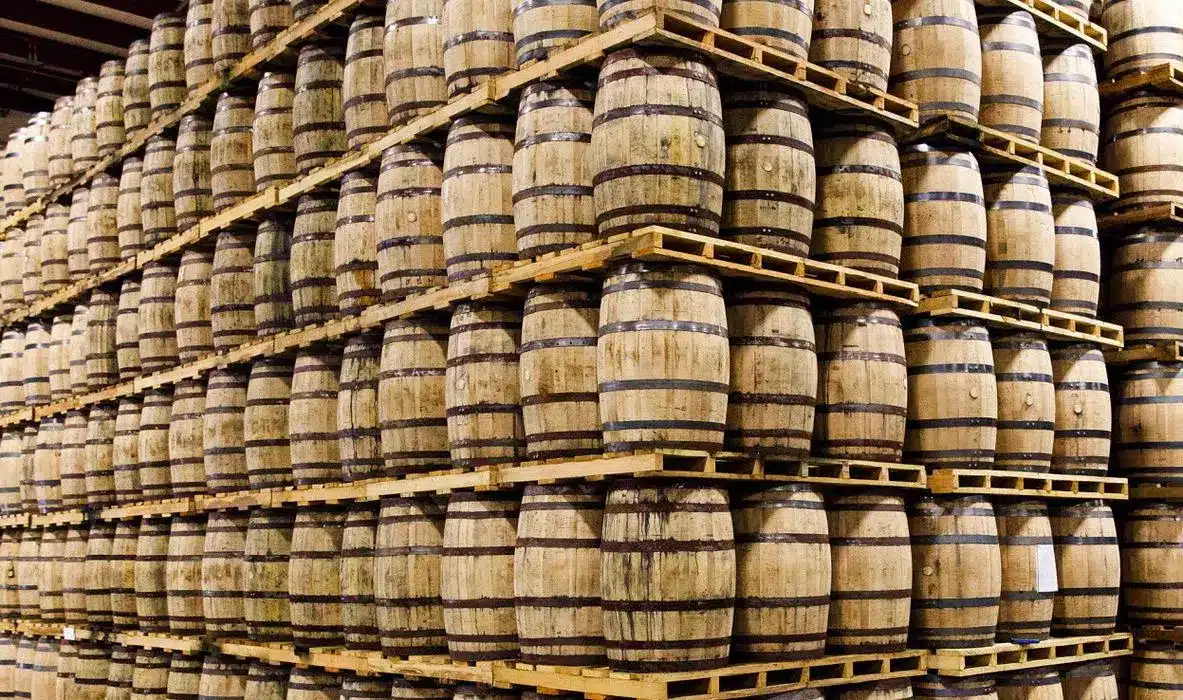
In the heart of the Bluegrass State, a remarkable phenomenon unfolds: Kentucky is home to more bourbon barrels than people. This isn’t just a quirky statistic; it’s a testament to the deep-rooted history, intricate craftsmanship, and undeniable economic power of America’s native spirit. With over 16.1 million barrels of bourbon currently aging in rickhouses across the state, compared to a human population of roughly 4.5 million, the ratio stands at a staggering 3.6 barrels for every Kentuckian [1]. This fact alone hints at a world of boozy secrets and fascinating traditions that often remain hidden from outsiders. This article delves into the unique elements that make Kentucky bourbon legendary, exploring its history, the science behind its flavor, and the local insights that only true connoisseurs appreciate.
From the distinctive limestone water that filters through the state’s bedrock to the precise federal regulations that define its very essence, bourbon is inextricably linked to Kentucky. It’s a story of pioneering distillers, generations of craftsmanship, and a global industry that continues to thrive despite modern challenges. Prepare to uncover the hidden facts and local lore that explain why this amber liquid is more than just a drink; it’s a cultural icon, a source of immense pride, and a cornerstone of Kentucky‘s identity. Whether you’re a seasoned bourbon enthusiast or a curious newcomer, these insights will deepen your appreciation for the spirit and the state that perfected it.
Something in the water: kentucky’s geological advantage
One of the most frequently cited, yet often misunderstood, secrets behind Kentucky bourbon is its water. It’s not just any water; it’s water that has flowed through vast limestone reserves beneath the state’s surface. This natural filtration process is crucial: the limestone acts as a giant sieve, removing impurities like iron, which can negatively impact the taste and color of the whiskey. Simultaneously, it infuses the water with beneficial minerals such as calcium and magnesium. This mineral-rich, iron-free water is considered ideal for fermentation, contributing to the smooth, clean taste that is a hallmark of Kentucky bourbon.
Locals often quip that the same limestone water that makes their bourbon so good also makes their horses grow stronger, a nod to Kentucky‘s other famous industry. This geological advantage is so significant that it’s often cited as a primary reason why 95% of the world’s bourbon is produced in the Bluegrass State. It’s a natural gift that distillers have harnessed for centuries, a silent partner in the creation of every barrel. Understanding the role of this unique water source is key to appreciating the fundamental character of Kentucky’s native spirit.
The strict rules of the game: what makes it bourbon
While all bourbon is whiskey, not all whiskey is bourbon. This adage is fundamental to understanding the spirit, and it’s enforced by a strict set of federal regulations that define what can legally be called bourbon in the United States. These rules, established to protect the integrity and quality of the product, are part of the boozy facts that distinguish bourbon from other whiskies. To qualify as bourbon, the spirit must be:
- Produced in the United States: While 95% comes from Kentucky, it can technically be made anywhere in the U.S.
- Made from a grain mixture that is at least 51% corn: This high corn content contributes to bourbon‘s characteristic sweetness.
- Aged in new, charred oak barrels: This is perhaps the most critical rule, as the charred oak imparts much of bourbon‘s color, flavor, and aroma. The charring process caramelizes the wood sugars, creating compounds that contribute notes of vanilla, caramel, and spice.
- Distilled to no more than 160 (U.S.) proof (80% alcohol by volume): This ensures a certain level of flavor retention from the grain.
- Entered into the container for aging at no more than 125 proof (62.5% alcohol by volume): This lower entry proof allows for more interaction between the spirit and the wood.
- Bottled at 80 proof or more (40% alcohol by volume): The final product must meet this minimum alcohol content.
- Contain no artificial colors or flavors: This ensures the natural purity of the bourbon [2].
These regulations are not merely bureaucratic hurdles; they are the guardians of bourbon‘s identity, ensuring that every bottle bearing the name adheres to a tradition of quality and authenticity. They are the hidden facts that define the very essence of America’s native spirit.
The angel’s share and the devil’s cut: the science of aging
The aging process of bourbon in rickhouses is a magical, yet scientifically precise, transformation. As the spirit rests in its new, charred oak barrels, it interacts with the wood, absorbing flavors and developing its characteristic amber hue. However, not all of the liquid makes it to the bottle. This is where the Angel’s Share comes in – the portion of bourbon that evaporates through the porous oak barrels during aging. This loss, typically 2-4% per year, is a natural and essential part of the process, concentrating the flavors and enriching the remaining spirit. Distillers consider it a sacrifice to the heavens, hence the poetic name.
Conversely, there’s also the Devil’s Cut. This refers to the bourbon that soaks into and remains trapped within the wood of the barrel staves, even after the barrel has been emptied. While the Angel’s Share is lost to the atmosphere, the Devil’s Cut can sometimes be extracted from the wood, offering a unique, highly concentrated bourbon experience. These terms are more than just colorful folklore; they represent the profound impact of the barrel and the environment on the final product. The constant expansion and contraction of the wood due to Kentucky‘s fluctuating temperatures (hot summers, cold winters) forces the bourbon deep into the oak, extracting complex flavors and sugars, making the aging process a dynamic and vital component of bourbon production.
Rickhouses and the art of the barrel
Rickhouses are the iconic, multi-story wooden structures where bourbon barrels are aged. Unlike climate-controlled warehouses, rickhouses are non-environmentally controlled, meaning the bourbon inside is directly exposed to Kentucky‘s seasonal temperature swings. This exposure is crucial for the aging process, as the expansion and contraction of the barrels facilitate the interaction between the spirit and the wood. Each rickhouse and even each floor within a rickhouse can impart subtle differences to the bourbon due to variations in temperature and humidity. This is one of the boozy facts that contributes to the complexity and diversity of bourbon flavors.
The new, charred oak barrel itself is an art form. Each distillery has its preferred level of char, which significantly influences the flavor profile. After a barrel has been used for bourbon, federal law dictates that it cannot be reused for bourbon again. This leads to a fascinating secondary market, where these “spent” bourbon barrels are highly sought after by producers of other spirits, such as Scotch whisky, Irish whiskey, rum, and tequila, as well as by craft brewers for barrel-aged beers. This reuse of barrels is a testament to the efficiency and interconnectedness of the global spirits industry, a hidden fact that highlights bourbon‘s far-reaching influence.
Bourbon county’s dry irony and other local quirks
Despite its name, Bourbon County, Kentucky, has a surprising boozy secret: for a significant period, it was a “dry” county, prohibiting the sale of alcohol. While the county was established in 1785 and played a pivotal role in the early development of bourbon, the name itself refers to the region from which the whiskey was shipped, not necessarily where it was exclusively produced. This historical irony is a fascinating footnote in the story of Kentucky bourbon, showcasing the complex interplay of local laws, cultural norms, and economic realities.
Another beloved Kentucky tradition is the Mint Julep, the official drink of the Kentucky Derby. This refreshing cocktail, made with bourbon, mint, sugar, and crushed ice, is synonymous with the iconic horse race. Over 120,000 Mint Juleps are served during the Derby weekend alone, a testament to its enduring popularity and its status as a quintessential Kentucky experience. These local quirks, from dry counties to signature cocktails, add layers of charm and character to the bourbon narrative, making it a rich tapestry of history and tradition.
The future of america’s native spirit: challenges and triumphs
The Kentucky bourbon industry, while thriving, is not without its challenges. Recent years have seen fluctuations in production and sales, with some reports indicating a slump to pre-pandemic levels in 2025 [3]. Factors such as changing consumer preferences, particularly among younger generations, and the impact of tariffs have created headwinds for distillers. However, the industry remains resilient, with a strong focus on innovation, sustainable practices, and expanding its global reach. The sheer volume of bourbon barrels aging in Kentucky rickhouses, a record 16.1 million, underscores the industry’s long-term vision and confidence in the future of America’s native spirit.
Distillers are continuously experimenting with new mash bills, aging techniques, and finishes to cater to evolving tastes, while also preserving the traditional methods that define bourbon. The Kentucky Bourbon Trail continues to be a major tourism draw, attracting millions of visitors each year and contributing significantly to the state’s economy. This blend of tradition and innovation ensures that Kentucky bourbon will continue to be a source of pride and prosperity for the Bluegrass State for centuries to come. The story of Kentucky bourbon is a dynamic one, constantly evolving while staying true to its roots, a true reflection of American ingenuity and perseverance.
Why Kentucky remains the undisputed king
Kentucky‘s dominance in the bourbon world is no accident; it’s the result of a unique combination of natural resources, historical legacy, and unwavering dedication to craftsmanship. The state’s limestone water, ideal climate for aging, and generations of distilling expertise have created an unparalleled environment for producing America’s native spirit. The sheer volume of bourbon barrels aging within its borders, far outnumbering its human population, is a powerful symbol of this legacy. From the strict federal regulations that define its character to the local traditions that celebrate its culture, Kentucky bourbon is a testament to a rich and enduring heritage. It’s a story steeped in history, flavored by science, and celebrated by enthusiasts worldwide, ensuring that Kentucky will remain the undisputed king of bourbon for generations to come.
- Kentucky.com. (2025, December 11). Bourbon production slumps to pre-pandemic levels in 2025. https://www.kentucky.com/lexgoeat/bourbon/article313593499.html
- Kentucky Tourism. (n.d.). Bourbon 101 – Dive into Kentucky’s Distilling Legacy. https://www.kentuckytourism.com/things-to-do/bourbon/bourbon-101
- The Spirits Business. (2025, October 9). Ageing Bourbon barrel numbers hit all-time high. https://www.thespiritsbusiness.com/2025/10/ageing-bourbon-barrel-numbers-hit-all-time-high/
